The largest independent, international conference dedicated exclusively to engineering simulation.
Attendees discovered new technologies & innovative techniques, whilst networking with end-users, software vendors, consultants and academics, in this worldwide celebration of simulation.
Traditional methods of training are changing. NAFEMS is stepping up to the challenge by providing you with a range of training options, all available remotely, all available from home, and all keeping to the same, internationally renowned, independent standards.
NAFEMS provides the engineering analysis community with as many as fifty seminars, conferences, workshops and open forums throughout the world each year. As the only truly independent organisation dedicated to engineering analysis and simulation NAFEMS' events are widely held to encompass the broadest and most accurate view of the community available.
This is your community. Now more than ever, we're working harder to deliver more opportunities for you to stay connected during these challenging times.
The NAFEMS Resource Centre provides a gateway to all of the technical material produced by NAFEMS. It enables access to our publications, magazine articles, webinars, papers and presentations.
Relevant material can be found by searching by keyword, filtering by multilevel technical categories or filtering by author, organisation, or type of resource.
There are currently over 8,000 resources in the centre with this number growing weekly.
As an organisation dedicated to promoting the best use of simulation and analysis and with our wealth of experience within the analysis and simulation industry, there is no better place to further your professional development with our quality and worthwhile training to reach your goals.
Keep track of your development using the PSE Competency Tracker, and get PSE Certified to demonstrate your skills to current and future employers.
Be recognised as a valued independent authority that operates with neutrality and integrity
We focus on the practical application of numerical engineering simulation techniques such the Finite Element Method for Structural Analysis, Computational Fluid Dynamics, and Multibody Simulation. In addition to end users from all industry sectors, our stakeholders include technology providers, researchers and academics.New Column
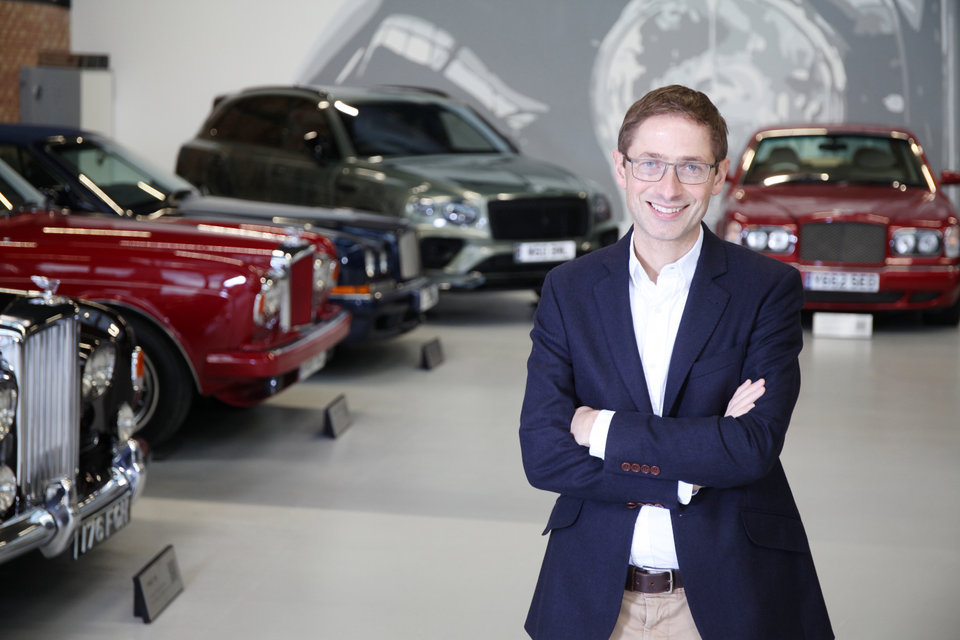
The Importance of Modelling and Simulation in Engineering the Next Generation of Bentley Vehicles
Michael Bottomley
Head of Whole Vehicle Systems (EG/S) Bentley Motors Limited
Abstract
The automotive industry is going through the largest change since the transition from the horse to the car at the start of the 20th century. The electrification of vehicles has far reaching impacts on how a car is designed and engineered. Electrification changes the traditional differentiation between vehicles, reduces the barriers to entry for new competitors and raises questions of what the customer really wants. Modelling and simulation is a key tool in the vehicle development process to ensure Bentley reacts to these changes and becomes the leader in sustainable luxury mobility it aims to be.
Bio
2002: Graduated University of Nottingham, Masters in Mechanical Engineering 2002 – 2008: Ford Motor Company (UK and Australia); completed the graduate scheme and joined Vehicle Integration, developing Fiesta based vehicles (Ford Fiesta ST, Ford Fusion, Ford Fiesta for India) 2008 – 2018: Bentley Motors , Field Quality: leading the problem solving process, reducing warranty costs and improving customer satisfaction 2019 – 2023: Bentley Motors, Whole Vehicle Engineering systems: leading the virtual series, the PLM project, and the bill of materials on all future Bentley’s
It’s only a Model (shhh!)
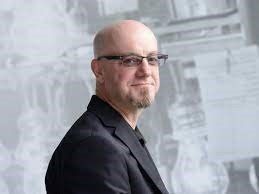
Professor Jon Holt
PhD, BEng, CEng FIET, FBCS CITP, FINCOSE Professor of Systems Engineering, Cranfield University Technical Director, INCOSE UK
Abstract
In this presentation, Prof Jon Holt will introduce on the concept of complexity, and discuss how MBSE is a natural evolution of document-based Systems Engineering. In this talk he will present and introduce the main considerations that must be addressed for successful MBSE implementation and adoption. This is summarised and encapsulated in ‘MBSE in a slide’.
This talk will not only introduce the main concepts, but will also dismiss many of the myths associated with MBSE, such as ‘MBSE is all about SysML’, ‘MBSE adds a large overhead to system development’ and that ‘all models are wrong’ amongst others. Topics covered will include: the System, models, notations, tools, frameworks and compliance.
Jon has 30 years’ experience in using and deploying MBSE in industry and MBSE in a slide represents a summary of everything that he has learned in this period, which is either an indication of brilliant abstraction, or a shocking indictment on how little has been achieved in the last three decades!
Bio
Jon is an international award-winning public speaker and author. He is the author of 18 books in the field of applied Model-based Systems Engineering, including the children’s book ‘Think Engineer’. He is a Director and Principal Consultant for Scarecrow Consultants Limited, works in many industries and has applied his work in many disciplines. He is also a Fellow of both the IET and the BCS and, in 2022, was awarded an INCOSE Fellowship, of which there are only 80 in the world. Jon also holds a Chair Systems Engineering at the UK Defence Academy and is the Technical Director of INCOSE UK.
The Science and Engineering of the James Webb Space Telescope
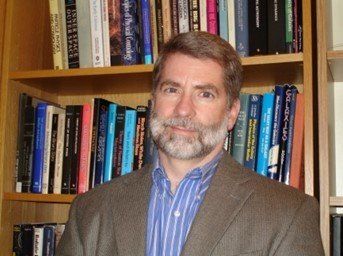
Michael T. Menzel
JWST Mission Systems Engineer NASA
Abstract
The James Webb Space Telescope (JWST), launched on December 25, 2021, is NASA’s successor mission to the Hubble Space Telescope. JWST has been designed and developed to observe “first light” objects in the nascent universe, the evolution of galaxies over cosmic history, star birth within our own galaxy, planet formation and evolution both in our solar system and in solar systems around other stars and to make detailed observations of some of the recently discovered exoplanets. The JWST telescope has an aperture greater than 6 meters in diameter, and along with its compliment of science instruments must be cooled to cryogenic temperatures below 50K. It is operated at the Sun-Earth L2 point to keep thermal sources such as the Sun and Earth in the same general direction so that their radiation can be shielded by a “tennis court sized” sunshield, allowing the payload to attain these temperatures passively. The observatory is now well into its first year of science operations, producing magnificent images and science data that is already reshaping our understanding of the early universe. This presentation will give an overview of JWST science, its system design and challenges and the way integrated systems analysis was performed to address them. The presentation will then discuss the science observations and data collected to date.
Bio
Mr. Menzel has 42 years of experience in the aerospace, working 23 years in industry for commercial and defense missions and for NASA for the past 19 years. He is currently the NASA Mission Systems Engineer for the James Webb Space Telescope.
Mr. Menzel received a B.S. in Physics from the Massachusetts Institute of Technology in 1981 and an M.S. in Physics from Columbia University in 1986. He began his career in 1981 with the RCA Astro Space Division in East Windsor, N.J. as an antenna engineer, designing flight antennas for commercial and defense communications and remote sensing satellites. In 1990 he took a position in the Systems Engineering Group of the General Electric Astro Space Division designing commercial, DOD and civil space systems. In 1995 he took a position as Director of Systems Engineering in the Orbital Sciences Corporation, and in 1997 he took a position as the Deputy Program Manager for the Hubble Space Telescope Servicing Group at Lockheed Martin.
Mr. Menzel began working on the Pre-Phase studies for the Next Generation Space Telescope in 1998, and in June of 2004 he took his current position as the NASA Mission Systems Engineer for the James Webb Space Telescope.
In addition to his various engineering positions, Mr. Menzel has also served as an adjunct lecturer in Physics and Astronomy at various colleges. His hobbies include weightlifting, bicycling and amateur astronomy.
Mr. Menzel has been the recipient of the Robert H. Goddard Exceptional Achievement Award for Engineering in 2009, the NASA Systems Engineering Excellence Award in 2010, the Mission Engineering and Systems Analysis Division Engineering Excellence Award in 2013, the NASA Outstanding Leadership Medal in 2013, the 2020 Robert H. Goddard Merit Award in 2020, the NASA Distinguished Service Medal in 2022, the NASA Systems Engineering Excellence Award in 2022, the Norman L. Baker Astronautics Engineer Award in 2023 and AIAA Goddard Astronautics Award in 2023.
A Journey from Physics-based Simulations to Data-driven Approaches to Help Bones Heal Faster
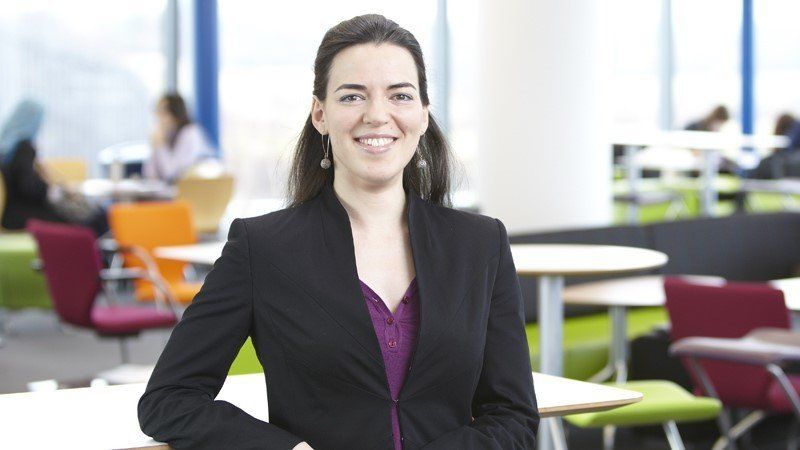
Professor Carmen Torres-Sánchez
Professor of Multifunctional Materials Manufacturing at Loughborough University
Abstract
I will present the work we are doing at the Multifunctional Materials Manufacturing Lab (https://rb.gy/hmar0) to design, manufacture and test new substrates, materials and structures with multifunctionalities. This is, materials, products and systems that can do more than ‘one thing at a time’, e.g., a lightweight porosity-tailored beam that bends without breaking and transports mass efficiently. Nature calls it bone. Simulation that supports decision making at the design stage, that permits system calibration and in silico validation that enhances testing at the quality-control final stages are intertwined within our experimental research on scaffolds for tissue engineering. Most recently, we have understood that physics-based modelling cannot give us the full picture because we have to deal with intractable physics. Hence, we are employing data-driven approaches to further interrogate cause-effect of in-service structures, materials and medical products. The presentation will reflect on lessons learnt along our journey to assist both modellers and practitioners.
Bio
Carmen Torres-Sanchez is a Professor of Multifunctional Materials Manufacturing at Loughborough University where she leads the MMM Lab. She is a Chartered Engineer, a Fellow of the Institution of Mechanical Engineers and a Fellow of the Higher Education Academy. Her research interests are the design and manufacture of multifunctional materials with tailored properties to meet specific requirements (e.g., thermal, structural, acoustic, biological). This has driven the development of patented technology to adjust the cellular structure of foams via controlled ultrasonic irradiation. Her lab also works with alloys with multifunctional properties to tailor their mechanical, chemical and biological performance. The range of applications spans medical devices, transport industries and food technology. She is the Executive Director of the EPSRC Centre for Doctoral Training in Embedded Intelligence and is a member of the TALENT Commission for the support of Technicians as key partners in Research & Development. She is also a member (by invitation) of the NAFEMS Americas WISE Subcommittee.
Invited Speakers
Simulation Deployment: The Mondelez Journey
Ed Throp
Lead CFD Engineer at Mondelez
Abstract
This presentation will discuss the growth of the application of physical science (FEA/CFD/DEM) based simulations within Mondelez and the democratisation journey.As well as showing examples and discussing the process of selecting which models to democratise. It will dig a bit deeper into one of the CFD based models looking at the balance between ideal, best practice approaches for things such as meshing, balanced against practical considerations to allow for a robust and timely simulation to be completed.
The presentation will wrap up with a look at our future direction and plans to ensure more models are accessible to more people.
Bio
Edward studied Chemical Engineering at UMIST and started his career working for ICI in a multidisciplinary team where he built physical models of stirred tank reactors often in support of the modelling efforts. Following the demise of ICI he joined Fluent working initially as an account manager for the chemical, process food and drink industry. After a short time in sales he moved into a technical role in Fluent as a support/pre-sales and consulting engineer working with a range of industries including industries and companies including Cadbury (pre Mondelez). He remained with Ansys when they acquired Fluent and become the team leader for the Sheffield based consulting team.
After nearly 20 years with Fluent/Ansys he took the opportunity to join Mondelez in the newly formed modelling and Simulation team. He has now been at Mondelez for 6 years as the lead CFD engineer in the team.
Automotive Crash Simulation: Lessons from History
Alan Prior
Advisor, Non-Executive Director, Board Chair
Abstract
The simulation of automotive crash has evolved over a period of 50 years to become an analysis domain that now has significant influence on the development of passenger vehicles. It stands as prime example of advanced numerical multi-physics simulation.
In this presentation we consider the accomplishments of the many pioneers who contributed to the advanced technologies used today for crash simulation, and highlight some of the milestones in performance and accuracy that have been achieved over the last 50 years.
In looking back over the history of the domain, we can also find lessons for today: in how technologies can be advanced through the collaboration of various stakeholders, the identification of core value, and the symbiotic relationship between simulation and physical test.
Bio
Alan is a part-time advisor and consultant to several companies working in simulation and machine learning, and is a non-executive director and board chair at digiLab Solutions.
He started his career in 1984 using early simulation methods, completing a PhD in impact dynamics while working for the UK MoD. He joined MSC Software in 1990, then in 1992 moved to help set up the UK office of HKS, the ABAQUS company.
Alan spent 30 years as a technical leader in HKS, ABAQUS and then Dassault Systèmes, including executive roles as Vice President for Worldwide Technical Sales in the SIMULIA Brand and Vice President for Industry Consulting for all Dassault Systèmes brands in Northern Europe.
Alan is a Chartered Engineer and Fellow of the Institution of Mechanical Engineers.
This site uses cookies that enable us to make improvements, provide relevant content, and for analytics purposes. For more details, see our Cookie Policy.
By clicking Accept, you consent to our use of cookies.